

By Online top tools · June 2026 · 10 minute read
I have run more random draws than I can count: classroom roll calls, office raffles, Twitch giveaways, and the nightly “who does the dishes” standoff at home. The pattern never changes. The second a pick becomes visible and obviously random, people stop arguing and start watching. That is the appeal of a spin number wheel in one sentence, and it is why I reach for one instead of a coin, a dice, or names in a hat.
This is the guide I wish I had when I started: how the wheel actually decides a result, when it beats older methods, how to set one up in under a minute, and the cases where it quietly fails. You can follow along with our free spin number wheel and test each idea as you read.
Table of Contents

What a spin number wheel actually does
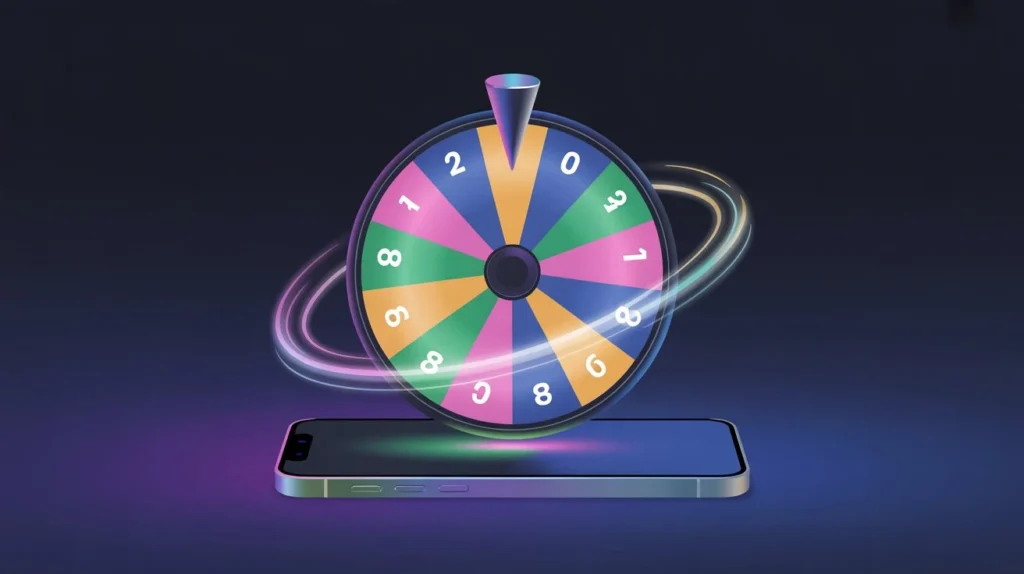
A spin number wheel is a circle split into numbered segments with one fixed pointer. You trigger a spin, the wheel slows down, and the pointer settles on a single number. On a digital wheel the spinning is theatre. The result is chosen by code the instant you click, and the animation just keeps you in suspense while it plays out.
PRNG, seeds, and good-enough randomness
Most digital wheels run on a pseudo-random number generator, or PRNG. It starts from a seed, usually the clock measured down to the millisecond, and feeds that through a formula that spits out numbers with no pattern a human can spot. The word “pseudo” worries people, but for a raffle, a lesson, or a game night it behaves no differently from pure chance. The only time the distinction matters is an audited or high-stakes draw, where teams use hardware generators that pull randomness from physical noise such as atmospheric static, the method RANDOM.ORG has documented for years (Haahr, n.d.). For anything most readers will ever run, a solid PRNG is more than enough.
Physical vs digital spin number wheels
| Physical spin wheel | Digital spin number wheel |
|---|---|
| Built or bought, then stored somewhere | Loads free in any browser, instantly |
| Locked to its printed numbers | Any range you type, including decimals |
| Segments and friction wear over time | No moving parts, so no drift |
| No power or signal needed | Needs a charged device |
Neither is “better” across the board. A cardboard wheel wins a kindergarten craft table. For almost everything else, the flexibility of a digital spin number wheel is hard to beat.
Why a wheel beats a coin, dice, or a hat
Those older methods work, and I am not going to pretend otherwise. Here is where a spin number wheel pulls ahead, plus one spot where it does not.
It ends the you-cheated argument
A tossed coin or a hand fishing around in a hat invites suspicion. Did you nudge it, did you peek, did you feel for the folded paper. A spin number wheel runs the same way every time, and the better tools keep a result you can point to afterward. Nobody touched the outcome, so the accusations rarely start.
Any range you want, instantly
A dice gives you one to six. A coin gives you two outcomes. Need a number between one and fifty-seven, or a decimal between 1.0 and 5.5? Type the range and spin. No spare props, no mental math to stretch a six-sided dice into the number you actually need.
The spin itself buys attention
The slow-down before the pointer lands is doing real work. In a classroom or on a livestream, those two seconds of suspense pull every eye to the screen, which a silent coin flip never manages. Wheel of Fortune has run on that single mechanic for decades for a reason.
It is always in your pocket
You might not have dice in a drawer, but you have a browser. A spin number wheel opens on any phone or laptop with nothing to download, which is usually the deciding factor in the moment you need it.
How to use a spin number wheel in under a minute
There is no setup skill involved. Three steps and you are spinning.
Step 1: Set your range
Pick the smallest and largest number you need. Student numbers run one to thirty, raffle tickets might run one to one hundred fifty, a dice replacement is one to six. On our spin number wheel you type the low and high value and it builds the segments for you.
Step 2: Decide whether numbers can repeat
This is the step people skip and then regret. For a dice or a daily picker, let numbers repeat so every spin is independent. For a raffle, or anything where each person should win at most once, switch on the “remove after spin” option so a landed number drops off the wheel before the next pull.
Step 3: Spin, then record the result
Click spin, let the wheel settle on its own, and save the outcome. A quick screenshot or the built-in history is enough to put any later “are you sure that was fair” question to rest.
Which method fits which job
A spin number wheel is not always the answer. Here is how I match the tool to the task.
| Situation | Best approach | Why |
|---|---|---|
| Calling on students fairly | Wheel, repeats on | Visible, fast, removes the appearance of favoritism |
| Raffle or giveaway, one winner | Wheel with “remove after spin” | Each ticket wins once and the result is screenshot-proof |
| Replacing a six-sided dice | Spin number wheel set to 1 to 6 | Identical odds, nothing to lose under the couch |
| Audited or regulated draw | Certified hardware random generator | Independent entropy plus a log you can defend |
| A plain yes or no | A coin, honestly | One segment each way is overkill |
Four stubborn myths about random number wheels
Smart people repeat these constantly. Clearing them up will save you an argument or two.
Myth 1: The wheel is due for a different number
This is the gambler’s fallacy, and it is wrong. Each spin is independent, and the wheel has no memory of the last result. Land on 7 three times in a row and the fourth spin still carries the same odds of landing on 7 again. Tversky and Kahneman showed back in 1971 that even trained researchers read meaning into short random streaks that simply is not there, which is exactly why this myth feels so convincing (Tversky & Kahneman, 1971).
Myth 2: Digital wheels are less random than physical ones
A physical wheel drifts as its segments wear and friction builds on one side. A digital wheel has no moving parts to bias, and a reputable generator passes standard statistical tests for randomness. If anything, the digital version holds its fairness more reliably over the long run.
Myth 3: You have to pay for a fair wheel
The randomness in a free spin number wheel is the same as the randomness in a paid one. Paid tiers sell convenience, such as saved wheels or removed ads, not better odds. Fairness is not a premium feature.
Myth 4: You can stop the spin to rig it
On a proper digital wheel the number is locked the moment you click, before the animation even finishes. The spin is for show, so there is no live moment to grab and steer. The one real risk is an untrustworthy tool, which is the whole argument for sticking to a wheel you know and can verify.
Getting more out of your wheel
Once a spin number wheel is part of your routine, a few habits make it far more useful than a plain picker.
Weight the odds on purpose
Some wheels let you weight segments so one number lands more often than the rest. A quiet classroom use: nudge a shy student’s number up a notch so they get called on a little more, without singling them out in front of the room.
Keep a result log when fairness is questioned
When money or prizes are on the line, run a wheel that timestamps each result, or simply record your screen. I once ran a Facebook giveaway where the same person won twice in a row and a commenter cried foul. I posted the screen recording showing the wheel spinning untouched, and the complaint evaporated. A log turns a shouting match into a five-second reply.
Offload small decisions to protect your focus
There is real science behind “stop deciding everything.” Vohs and colleagues found that making choice after choice drains the same mental resource you rely on for self-control, leaving less of it for the decisions that genuinely matter (Vohs et al., 2008). Handing trivial picks to a spin number wheel, such as which task to start or what to cook, is a small way to spend that limited energy where it counts instead of burning it on lunch.
Creative ways to use a random number wheel
A wheel is not just for raffles. A few setups I keep coming back to:
- Workout randomizer: map ten exercises to one through ten and spin to choose the next move.
- New-recipe night: number the days one to seven and let the wheel pick which evening you cook something unfamiliar.
- Book club reader: assign each member a number and spin to decide who summarizes the next chapter.
- Chore rota: five roommates, numbers one to five, a weekly spin for who takes the bathroom.
- Creative constraints: link numbers to prompts such as “three colors only” or “use only circles,” then spin for a daily warm-up brief. Constraints tend to break creative block faster than a blank page does.
When not to use a spin number wheel
This is the part most articles skip, so let me be direct. A spin number wheel is the wrong tool when the result carries legal, financial, or safety weight, or when it has to stand up to independent verification. Regulated prize draws, court-style selections, and anything generating a security value need certified hardware randomness and a documented trail, not a browser animation. It is also overkill for a simple yes or no, where a coin is faster. Use the wheel for the wide middle where most decisions actually live: classrooms, games, raffles, team logistics, and the small daily choices that do not deserve much thought.
Frequently asked questions
Can I use the wheel offline?
Yes. Many wheels keep working once the page has loaded, since the randomness runs on your device, not a server. If you expect no signal at all, load the page in advance, or fall back to a paper wheel made from a plate and a cardboard arrow for the day.
Can the wheel include negatives or decimals?
Often, yes. A flexible spin number wheel lets you set ranges that cross zero, such as -50 to 50, and some support decimal steps like 1.0, 1.5, 2.0. Check the range settings on your tool before you rely on it for anything fiddly.
How do I stop the same number repeating?
Turn on a “no repeat” or “remove after spin” setting. If your tool lacks one, delete the landed number from the wheel by hand before the next pull. For raffles, this is what guarantees each entry can win only once.
Is the wheel fair enough for legal or financial picks?
For classrooms, games, raffles, and daily choices, a standard spin number wheel is fair and reliable. For official, regulated, or legally binding selections, use a certified random source that provides independent entropy and an auditable record. Match the tool to the stakes.
Can a random picker help with overthinking?
For low-stakes choices, it can. Handing the decision to a neutral spin number wheel removes the pressure to optimize a choice that barely matters. Start with tiny ones, like what to eat or which chore to begin, and keep important decisions for yourself. If indecision is a persistent and distressing pattern, that is worth raising with a qualified professional rather than a wheel.
References
- Tversky, A., & Kahneman, D. (1971). Belief in the law of small numbers. Psychological Bulletin, 76(2), 105-110. https://doi.org/10.1037/h0031322
- Vohs, K. D., Baumeister, R. F., Schmeichel, B. J., Twenge, J. M., Nelson, N. M., & Tice, D. M. (2008). Making choices impairs subsequent self-control: A limited-resource account of decision making, self-regulation, and active initiative. Journal of Personality and Social Psychology, 94(5), 883-898. https://doi.org/10.1037/0022-3514.94.5.883
The bottom line
A good wheel will not make a hard decision for you. What it does is take every easy one off your plate, fairly and in plain sight, so the arguing stops and the dithering ends. Set your range, decide whether numbers repeat, and spin. When you are ready, open our spin number wheel and let your next small decision take three seconds instead of three minutes.